Category: Guides & Strategy

Words With Friends Endgame Tactics: How to Steal Wins When the Tile Bag Runs Empty
1. Executive Summary — The Transition to Determinism An empty Words With Friends bag ends luck.Hidden tiles become solvable algebra.Probability collapses into calculation.One out-play can swing forty points.Endgames are won by deduction, not hope. Words With Friends uses a 104-tile pool. While tiles remain in the bag, every draw injects uncertainty. The moment the bag…

Wordfeud Random Board Strategy: Tactical Navigation for Scrambled Multiplier Grids
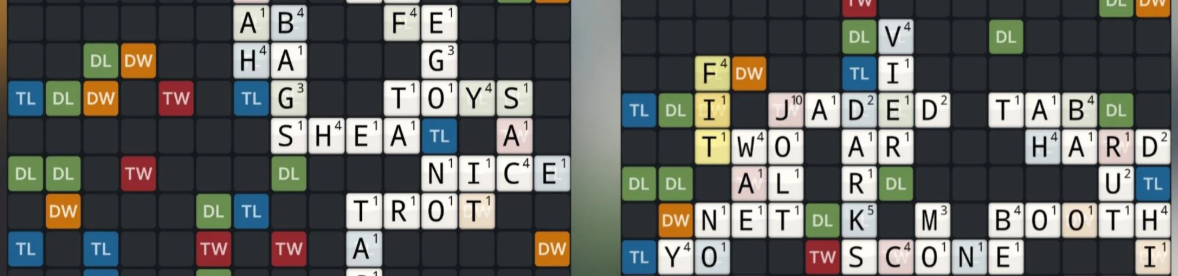
1. Executive Summary — The Chaos Matrix A random Wordfeud board is not Scrabble with noise.It is a new topology every match.Memorized openings become liabilities.Cluster geometry replaces corner scripture.Read the map. Then place the first tile. Wordfeud lets you choose a standard board or a random board. On standard, premium squares (DL, TL, DW, TW)…

Vowel-Heavy Salvage: Smart 4-Letter Plays to Clean Out Overwhelmed Tile Racks
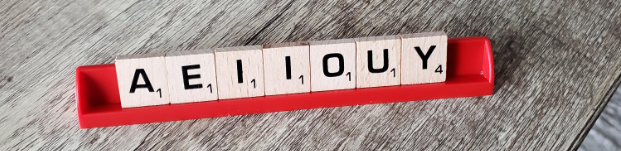
1. Executive Summary — The Drought of Consonants A vowel flood is not a flexible rack.It is a consonant drought.Pretty letters still produce paralysis.Small pairwise dumps prolong the crisis.Elite players flush vowels in bulk. Hold a rack like A E E I O O U and the board stops cooperating. Every stem wants a consonant…

The ‘Q-Without-U’ Defensive Shield: 10 Words That Save Dangerous Racks from Collapse
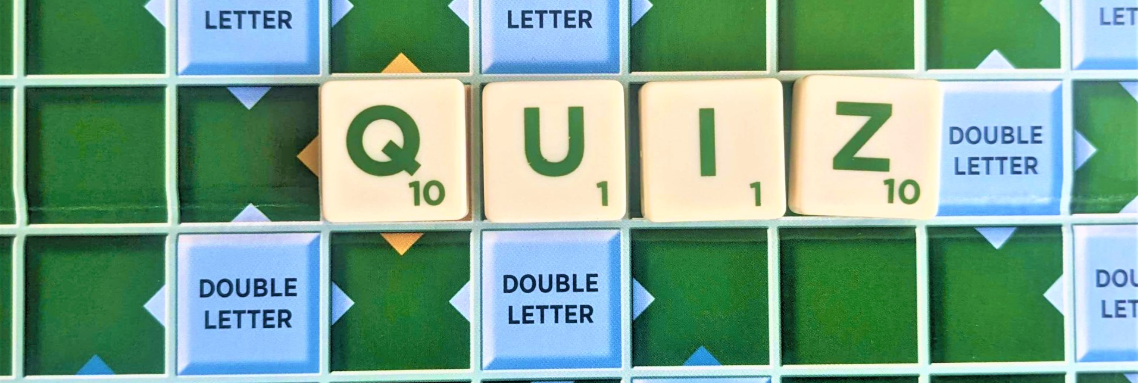
1. Executive Summary — The Anomalous Overhead A lone Q without a U is not a scoring asset.It is a structural rack emergency.Every unplayed turn compounds the damage.Elite players do not pray for a U.They deploy Q-without-U relief valves. The Q tile is worth 10 points. That face value creates a dangerous illusion. Amateurs treat…

Defensive Word Warfare: How to Block Opponent Lanes and Starve Multiplier Squares
1. Executive Summary — The Positional Shift Board lockdown is not passive play.It is active denial of opponent equity.Score less now. Extract more later.Every open lane is a liability until sealed. Most competitive Scrabble, Wordfeud, and Words With Friends players still optimize the wrong variable. They maximize immediate score. Masters maximize Net Turn Valuation. That…

Mastering the High-Value Anagram: Techniques for Spotting 7-Letter Plays in Crumbling Racks
Every casual Scrabble, Wordfeud, and Words With Friends player knows the feeling. You draw seven tiles, shuffle them once, shuffle them twice, and stare at the rack like it is a single unsolvable puzzle. Your eyes bounce across the letters hunting for a whole word — a complete seven-letter bingo that unlocks the 50-point bonus…

Rack Balance Blueprints: How to Manage Vowels and Consonants for High-Scoring Bingos
Watch an amateur Scrabble, Wordfeud, or Words With Friends session and you will see the same habit on repeat: every turn, they scan the board for the single highest-scoring word available, slam it down, and celebrate the spike. Then the next rack arrives — six consonants, no vowel escape hatch, or six vowels with nowhere…

Multiplier Mastery: How to Dominate Wordfeud and Words With Friends Grid Layouts
If you learned word gaming on a wooden Scrabble board, your instincts are valuable — and incomplete. Mobile titans like Wordfeud and Words With Friends (WWF) are not “Scrabble with a touchscreen.” They are different scoring economies built on different maps. The boards still look familiar: a 15×15 grid, premium squares, seven tiles on a…

The Secret Power of 2-Letter Words: How to Instantly Double Your Scrabble and Wordfeud Scores
Most amateur Scrabble and Wordfeud players treat the board like a treasure hunt for one glittering prize: the seven-letter bingo. They stare at their rack, rearrange tiles, whisper almost-words under their breath, and wait for the perfect anagram to unlock a 50-point bonus. That mindset feels productive. It is also the fastest way to lose…