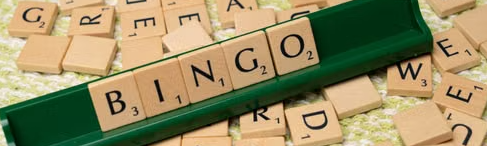
Watch an amateur Scrabble, Wordfeud, or Words With Friends session and you will see the same habit on repeat: every turn, they scan the board for the single highest-scoring word available, slam it down, and celebrate the spike. Then the next rack arrives — six consonants, no vowel escape hatch, or six vowels with nowhere clean to land — and the game quietly collapses.
Tournament masters do not worship the flashiest immediate dump. They worship rack balance: the disciplined management of the tiles you *keep* so that future turns can unlock 50-point bingo bonuses with ruthless consistency. The word you play is only half the move. The tiles you leave behind are the other half — and over a full game, that second half wins more matches than any one heroic midgame spike.
This WordMaster Pro blueprint teaches the vowel-to-consonant math elites use, the high-equity “leave” strings worth memorizing, and the emergency dumping tactics that rescue a broken rack before it costs you the board.
Section 1 — The Ideal Ratio (Vowel-to-Consonant Math)
Why greed destroys bingo equity
A bingo (playing all seven tiles in one turn) is the highest-percentage scoring engine in competitive play. The 50-point bonus is not a lottery ticket; it is a probability product. Your odds rise when your rack can form flexible stems — and those stems almost always require a **mixed** inventory of vowels and consonants.
Compulsive high-score hunting breaks that inventory. Examples of post-play disasters:
– You burn your only vowels on a 28-point play and keep `B C D G N T` — a rack that cannot breathe.
– You dump awkward consonants but keep `A E I O U U` — pretty letters, terrible bingo geometry.
– You chase a premium square with a five-tile word that scores well *now* while destroying a leave that would have bingoed *next turn*.
Masters ask a different question every turn:
“What is the best combination of score this turn + leave equity for next turn?”
Sometimes the answer is a 22-point play that preserves balance over a 34-point play that wrecks it. That is not timid play. That is compounding interest.
The 3–4 / 4–3 golden ratio
On a seven-tile rack, the mathematical sweet spot for open options is:
| Balance target | Vowels | Consonants | Strategic note |
|---|---|---|---|
| 3V–4C | 3 | 4 | Classic tournament default; strong bingo coverage with room for hooks and parallels. |
| 4V–3C | 4 | 3 | Equally viable; slightly more vowel-rich stems and flexible extensions. |
Why not 2–5 or 5–2? Because English word formation is brutally unkind at the extremes:
– Too many consonants and you cannot place tiles without forced dumps, often opening dangerous lanes for cheap points.
– Too many vowels and you generate short, low-density plays while watching bingo windows close.
The 3–4 / 4–3 window keeps anagram pathways alive. You can still form common six- and seven-letter shapes, still use two-letter parallels to sculpt the rack, and still absorb an unlucky draw without immediate collapse.
The baseline tiles: E, R, S, T, L, N
Not all balanced racks are equal. Balance plus high-frequency tiles is what actually raises bingo probability. Tournament players treat these as the backbone of rack equity:
| Tile | Strategic note |
|---|---|
| E | Highest-frequency vowel; appears in enormous bingo sets; rarely a liability. |
| R | Premier consonant for stems (ER, RE, R__E patterns). |
| S | Front/back hook royalty; pluralizes and verb-inflects into bingos. |
| T | Anchor in elite stems (TISANE, RETAIN, SATIRE families). |
| L | Smooth mixer; supports -LY, -AL, and flexible interiors. |
| N | High-frequency consonant; pairs cleanly with E/I/A for common endings. |
Hold these when you can. Spend duplicates, clunkers, and surplus oddities first. A rack like `E R S T L N + ?` (or a flexible seventh tile) is not “boring.” It is a loaded weapon.
Statistical intuition (without the spreadsheet fog)
You do not need a simulation engine at the table. You need heuristics that mirror what simulations show:
1. Synergy beats raw face value. Keeping `E R S T` often outperforms keeping `Z` plus three random junk tiles after a greedy dump.
2. One blank is a balance multiplier. A blank converts near-misses into bingos; protect balance even harder when you hold one.
3. Duplicates are silent killers. Two U’s, two V’s, or two I’s can look “vowel-rich” or “consonant-stable” while actually reducing anagram diversity. Prefer diversity inside your 3–4 ratio.
4. Fishing is rationed. Trading or soft-fishing for a miracle tile is fine only when leave equity is already strong. Fishing from chaos usually deepens chaos.
Rack balance is not passivity. It is **selective aggression**: score well without amputating tomorrow’s bingo.
Section 2 — The Critical “Leave Strings”
What “leave” means in tournament language
In developer tools, simulation engines, and club/tournament jargon, your **leave** is the set of tiles remaining on your rack after a play (or after a exchange).
If you start with seven tiles and play four, your leave is the three you kept. That leave has an **equity value** — an estimated expected future scoring contribution based on how often it leads to strong next plays, especially bingos.
This is the paradigm shift:
Managing what you **leave** is often more important than maximizing what you **score** on the current turn.
A 40-point play into a wretched leave can be worse, over two turns, than a 24-point play into `ERS` or `ERST`. Masters are not allergic to points. They refuse to buy points with bankruptcy.
How to evaluate a leave in five seconds
1. Count vowels vs consonants (aim for 3–4 / 4–3 after the full rack redraw expectation, and avoid extreme leaves now).
2. Prefer baseline tiles (**E R S T L N**) over isolated high-pointers with no support.
3. Penalize duplicates and Q-without-U style traps.
4. Ask whether the leave belongs to a known high-equity string (below).
5. Compare: *(this turn’s score + leave equity)* versus flashier alternatives.
Best leaves to hold: ranked quick-reference
Use this as flashcard fuel. These combinations appear again and again in strong bingo setups and high-equity simulation leaves. #### Elite 3-tile leaves
| Leave | Size | Equity tier | Strategic note |
|---|---|---|---|
| ERS | 3 | Elite | Premier bingo fragment; hooks forward/back; enormous stem coverage. |
| EST | 3 | Elite | Supercommon endings/prefix energy; pairs with almost any draw. |
| RET | 3 | Elite | Core of RETAIN/RETINA families; flexible with vowels and S. |
| RES | 3 | Excellent | Same engine room as ERS; slightly different hook angles. |
| SET | 3 | Excellent | Smooth, neutral, and highly anagrammable. |
| ENT | 3 | Excellent | High-frequency consonant frame; loves A/I/O draws. |
| SER | 3 | Strong | Same tiles as ERS in disguise — train yourself to see the permutation. |
| AIN | 3 | Strong | Excellent when your broader plan already has consonant support. |
| EIN | 3 | Strong | High-frequency vowel frame; loves S/T/R draws. |
| ORS | 3 | Strong | Slightly behind ERS/EST, still excellent structure. |
(Always evaluate the *actual* tiles: `ERS` is elite; `UUQ` is a crisis.)
Elite 4-tile leaves
| Leave | Size | Equity tier | Strategic note |
|---|---|---|---|
| ERST | 4 | Elite | One of the most famous high-equity leaves in Scrabble theory. |
| ELRS | 4 | Elite | ERS upgraded with L; opens -ER/-ERS pathways without clogging. |
| LNES | 4 | Elite | Balanced frame; S flexibility + E pivot + solid consonants. |
| AEST | 4 | Excellent | Key TISANE fragment; belongs to the most productive bingo stem ecosystems. |
| EIRT | 4 | Excellent | Core RETAIN DNA; classic tournament keep. |
| ENTS | 4 | Excellent | Stable, common, and bingo-prone after one good draw. |
| RETS | 4 | Strong | RET upgraded with S; plural/verb power. |
| ESTL | 4 | Strong | EST family plus L; smooth, flexible keep. |
| NERS | 4 | Strong | ERS engine with N depth. |
| ERSN | 4 | Strong | Near-ERST leave; still heavy bingo gravity after one strong draw. |
Leave strings worth drilling daily
Three-tile drill set: ERS, EST, RET, RES, SET, ENT, ORS, AIN
Four-tile drill set: ERST, LNES, ENTS, RETS, AEST, EIRT, ELRS, NERS
If you remember nothing else, remember this hierarchy:
1. ERST
2. ERS / EST / RET
3. LNES / ENTS
4. Everything else negotiates against those benchmarks
When two plays score within a few points, choose the one that leaves the higher string. That single habit will raise your bingo rate more than memorizing obscure sevens alone.
Section 3 — Emergency Dumping Tactics
Even disciplined players break balance. The draw gods deal `A A E I O U U` or `B C D G N V W`. Panic bingos do not exist. Emergency dumping does.
The goal of an emergency dump is not beauty. It is rack repair: shed the excess as cleanly as possible while minimizing board damage and, ideally, picking up a little score through dense short plays.
Rule 1 — Diagnose the break fast
| Broken rack type | Symptoms | Primary mission |
|---|---|---|
| Vowel flood | 5+ vowels | Dump 2–3 vowels immediately via short words / exchanges if available. |
| Consonant jam | 5+ consonants | Create vowel contact or parallel dumps; exchange if board is sealed. |
| Duplicate disease | Extra I/U/V etc. | Prioritize killing the duplicate even for modest points. |
| Q trap | Q without U (and no QI play) | Urgent Q solution or exchange; do not “hope.” |
Rule 2 — Prefer short parallel dumps over long ugly words
When balance collapses, amateurs force a long word that “uses a lot of tiles” but scores poorly and opens nightmares. Masters prefer:
– 2-letter parallel plays that burn one excess tile while creating multiple tiny cross-scores
– 3-letter hooks and ladders that unload two problem tiles at once
– Plays that spend the *worst* tiles, not the highest-face tiles by default
Examples of vowel-shedding patterns:
– Parallel `OE`, `AI`, `OU`, `EA` contacts where legal
– Tight threes like `EAU`, `AUE`-type shapes only when dictionary-legal in your lexicon — otherwise stick to rock-solid shorts you know cold
– Ending dumps onto existing words (`…A`, `…O`, `…I`) when hooks are safe
Examples of consonant-shedding patterns:
– Parallel two-letter plays using excess consonants against existing vowels
– Triples that pair one vowel with two clunkers (`C A B`, `D O G`-style clean shapes)
– Avoid parking clunkers on lanes that gift TL/TW to the opponent unless the dump is truly forced
Rule 3 — The “two-tile repair” standard
In an emergency, success often means reducing the crisis by two tiles:
– From 6 vowels toward 4
– From 6 consonants toward 4
You do not need a perfect 3–4 rebuild in one turn. You need **trajectory**. A clean two-tile dump that leaves `E R S` plus junk is already a resurrection.
Rule 4 — Exchange is a strategic play, not a surrender
If the board is closed, premiums are toxic to open, and your rack is unplayable without creating a free 60-point reply, **exchange**. Tournament players exchange because equity math says so. Pass-forced misery is how large leads evaporate.
Exchange priorities:
1. Dump the tiles destroying balance (extra vowels/consonants, Q-without-support, V/W/U piles).
2. Keep baseline leave tiles when possible (`E`, `R`, `S`, `T`).
3. Do not exchange from stubbornness after one bad turn — repair early.
Rule 5 — Emergency dump decision tree
1. Can I play 2–3 tiles parallel for decent density while improving vowel/consonant ratio? → Do that.
2. If not, can I play a short non-parallel dump that spends the worst offenders without opening a TW corridor? → Do that.
3. If every play either scores poorly *and* fails to repair, or opens a lethal lane → Exchange.
4. After the dump/exchange, re-check: am I back near 3–4 / 4–3 with ERS/EST/ERST gravity? → Resume normal equity play.
Rule 6 — Never “hero-dump” your leave backbone
The classic amateur emergency mistake: panicking and spending `S` or `E` because they are easy to play, while keeping `V U U W`. That cures nothing. In crisis mode, **protect ERST DNA** unless those tiles are the only legal escape. Your recovery bingo depends on them.
Closing: Score the Turn, Finance the Bingo
Compulsive max-scoring is a sugar rush. Rack balance is a training system.
Internalize the blueprints:
1. Target 3 vowels / 4 consonants or 4 vowels / 3 consonants as your default healthy rack.
2. Anchor keeps around E, R, S, T, L, N to raise seven-letter probability.
3. Treat your **leave** as a first-class decision — memorizing strings like ERS, EST, RET, ERST, and LNES will change how you choose between near-equal plays.
4. When balance breaks, use short parallel 2- and 3-letter dumps (or a disciplined exchange) to repair trajectory without torching the board.
Play the word that scores enough. Keep the tiles that bingo soon. That is how masters turn ordinary racks into 50-point engines — not by luck, but by blueprint.
Leave a Reply