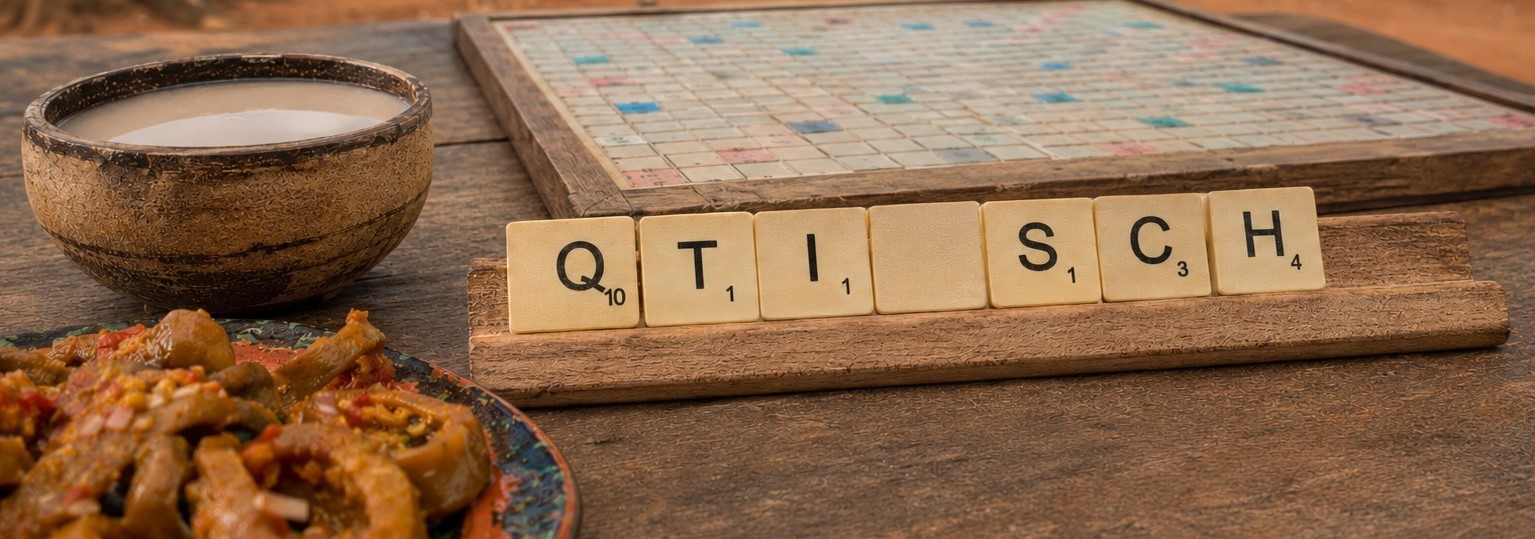
1. Executive Summary — The Most Valuable Zero on the Board
It scores nothing.
It changes everything.
A blank is not a free letter.
It is borrowed future power.
Spend it wisely and the game swings.
Spend it cheaply and the rack never forgives you.
Wordmaster.pro examines how competitive players should treat Scrabble’s blank tile — when to hold it for a bingo, when to deploy it on a premium square, when to use it defensively, and when passing up a modest score now preserves a match-winning play later. The goal is practical: help players stop treating the blank as a convenient filler and start treating it as high-equity currency.
Standard Scrabble includes two blanks in a 100-tile bag. Each blank is worth 0 points but can represent any letter. That combination makes it the most flexible tile in the game — and the easiest to waste.
This guide is not about blank trivia. It is about blank decision-making.
2. What Makes the Blank Different
Every other tile has a fixed identity. The blank does not.
That flexibility creates three special powers:
1. Bingo conversion
A blank often turns a six-tile near-miss into a seven-tile bonus word. In standard Scrabble, the 50-point bingo bonus usually dwarfs the value of saving the blank for later.
2. Premium amplification
Because the blank can become a high-value letter, it can land on Double Letter or Triple Letter squares as J, Q, X, Z, or another useful consonant — without costing face value on the tile itself.
3. Rack rescue
Blanks solve stuck racks: Q-without-U situations, vowel floods, rigid consonant clusters, and endgame hooks that otherwise do not exist.
What the blank is not
- It is not “free” just because it scores zero.
- It is not automatically worth spending on the first playable word.
- It is not a reason to ignore leave quality.
The blank adds options. You still choose whether those options are worth the price.
3. Blank Equity — How to Think Before You Spend
Blank equity is the expected future value of keeping the blank versus using it now.
Ask four questions every time the blank is playable:
- Can I make the same word without the blank? If yes, do not spend it.
- Does the blank unlock a bingo, premium, or critical block that nothing else unlocks? If yes, strongly consider spending.
- What leave do I keep after spending it? A blank spent into a broken leave can still be a mistake.
- What phase of the game is this? Early and midgame blanks often belong in high-upside plays. Late-game blanks belong in winning or saving plays.
Simple spend/hold framework
| Situation | Default action | Why |
|---|---|---|
| Blank completes a bingo through a premium | Spend | Highest upside; blank equity is cashed at peak value. |
| Blank turns a 14-point dump into a 32-point play with good leave | Usually hold | Score gain is too small for the lost flexibility. |
| Blank is the only way to play Q this turn | Spend if board is open | Trapped Q equity often exceeds blank-holding equity. |
| Blank blocks opponent bingo lane | Spend | Defensive blank use can save more than it scores. |
| Strong stem + blank + one draw away from bingo | Hold | Near-bingo blank equity is often enormous. |
| Endgame, you are behind, blank enables winning hook | Spend | Late blanks should solve the position, not decorate it. |
4. The Five Main Ways to Use a Blank
4A. The Bingo Cash-In — highest long-term value
This is the classic blank use.
You hold six strong tiles plus a blank. The blank represents the missing letter in a seven-tile word. You play the bingo, collect the 50-point bonus, and redraw fully.
Example shape:
- Rack: A E I N R S + blank
- Blank as T → RETAINS, RESTAIN, STAINER, or another AEINRST-family bingo depending on board fit
Example shape:
- Rack: A E I N S T + blank
- Blank as R → RETAINS, STRAIN, or related seven-letter options
The lesson is not one exact word. It is this:
If the blank completes a bingo with a reasonable leave and acceptable board risk, it is usually correct to spend it.
Holding a blank “just in case” while repeatedly scoring 18–24 points is how strong players lose to weaker ones who cash the bonus.
4B. The Premium Amplifier — blank as a high-value letter
Sometimes the best blank use is not a bingo. It is turning the blank into a strong letter on a multiplier.
Examples:
- Blank as Z on a Triple Letter square in a short word
- Blank as X crossing a premium
- Blank as J in a four-letter play that otherwise cannot exist
Because the blank itself scores 0, the premium math can be excellent. A blank-powered JO extension or short AX / EX family play through a hot square can outscore a safe five-tile dump.
Use this when:
- no bingo is realistic this turn or next turn
- the board offers a strong multiplier
- spending the blank materially changes the score swing
Do not use this for a mere 6-point improvement unless the game state demands immediate points.
4C. The Rack Rescue — blank as U, E, or S
Blanks often save ugly racks.
Q rescue
If you hold Q without U, a blank-as-U can unlock:
- QUA
- QAT
- QI extensions into longer words
- other Q-without-U constructions depending on board and rack
This is often correct because an unplayed Q is far costlier than a spent blank.
Vowel rescue
A blank can become the vowel that unlocks a playable word from a flooded rack. This is lower equity than a bingo cash-in, but still better than three turns of stagnation.
Hook rescue
Blank-as-S is classic. If the board word accepts a plural or verb form and the S hook creates a strong score or better leave, the blank may be doing real work.
Always ask: Could a real S do this instead? If yes, save the blank.
4D. The Defensive Block — spending zero to prevent disaster
Some blanks never score much. They still win games.
Examples:
- Using a blank to complete a short word that closes a Triple Word lane
- Forming a block that stops an obvious opponent bingo line
- Creating a hook that takes away their only high-upside reply
Defensive blank use is underrated because the benefit is invisible. You do not see the 70-point bingo you prevented. It still counts.
Spend defensively when:
- the opponent’s next turn has a clear detonation lane
- your alternative is a passive play that leaves the lane open
- the game is close enough that one swing decides it
4E. The Endgame Conversion — blank as match technique
In the endgame, blank equity changes.
At the end:
- Unplayed tiles subtract face value from your score.
- A blank subtracts 0.
- Therefore, holding a blank late is often less painful than holding Q, Z, J, or X.
That does not mean hoard it forever. It means:
- if the blank creates the winning out or the winning hook, spend it
- if the blank is the only way to unload a trapped power tile before the opponent goes out, spend it
- if the blank helps you play all remaining tiles, spend it
Endgame blanks are for closing, not dreaming.
5. When to Hold the Blank
Holding is correct more often than casual players think — but for shorter periods.
Hold the blank when:
- you have a strong bingo stem such as SATIN, RETINA, or AEINRST shape
- one reasonable draw may produce a seven-letter word with the blank
- the board still has open lanes for a future bonus
- spending now only improves the score by a little
- you can still score respectably without spending it
The one-turn test
If you are holding the blank, you should know what you are holding it for.
Bad reason: “Maybe something will appear.”
Good reason: “If I draw E or R, I bingo through that open row.”
If you cannot name the target within one turn, you are probably hoarding.
6. When to Spend the Blank Immediately
Spend now when:
- a bingo is available this turn
- the blank is the only way to score decently and keep Q from rotting
- the opponent has a visible high-upside lane and your blank stops it
- you are behind late and need a swing
- the blank improves the play by a large amount and leaves a healthy rack
The “would I still do this without the bonus?” test
For non-bingo blank plays, ask whether the play would still feel reasonable if the blank were a normal one-point tile.
If the answer is no, the blank is likely being wasted.
7. Common Blank Mistakes
Mistake 1: Using the blank when a normal tile works
If RETAINS is already on the rack without the blank, do not use the blank to make a prettier version of the same word.
Mistake 2: Spending for a small score bump
Turning 16 into 24 with the blank is usually poor currency management.
Mistake 3: Holding forever without a lane
A blank plus a pretty stem means nothing if the board no longer supports seven-letter words.
Mistake 4: Ignoring defensive blank value
Not all blanks exist to score. Some exist to deny.
Mistake 5: Forgetting what the blank represented
Track opponent blank usage. If they played a blank as S, that S is no longer in the unseen pool. That changes your odds.
Mistake 6: Using blank-as-S when S is available
This is the most common waste. Real S first. Blank only when S cannot do the job.
8. Tracking the Blanks — Yours and Theirs
There are two blanks in the bag. Treat them like match information.
Track your own blank
Before spending, note:
- what letter it represented
- whether the play required the blank
- what future option you are giving up
Track the opponent’s blank
When they play a blank, record the declared letter if visible. At minimum, know:
- one blank is gone
- one high-flexibility resource has been spent
- certain unseen-letter probabilities have shifted
Example: if an opponent uses blank-as-E early for a modest play, they may have squandered equity. Do not copy the mistake — exploit the fact that they no longer have that flexibility.
9. Case Studies
Case Study A — The Cheap Blank
Rack: A E I L N T + blank
Board: open
Player decision: uses blank-as-D for a 26-point six-letter play because it “looks strong”
Next turn: draws poorly; bingo lane still exists but blank is gone
Result: never bingos
Diagnosis: Blank spent for convenience, not conversion. A patient one-turn hold may have produced a 70+ swing.
Case Study B — The Correct Bingo Cash-In
Rack: A E I N R S + blank
Board: central lane open
Player decision: blank-as-T, plays RETAINS for bingo +50
Leave: fresh full rack
Result: large swing; blank equity cashed at peak
Diagnosis: Classic high-equity blank use.
Case Study C — The Defensive Blank
Score: close late game
Board: opponent has clear access to a high-scoring lane if one more vowel appears
Player decision: uses blank in a short blocking word that scores modestly
Result: opponent’s best reply drops sharply
Diagnosis: Zero-point tile prevents a much costlier loss. Excellent spend.
Case Study D — The Q Rescue
Rack: Q A E I R T + blank
Player decision: blank-as-U, plays QUA (or another legal Q-without-U construction) and clears the trap
Leave: balanced
Result: Q no longer destroys future draws
Diagnosis: Rescue spend beats hoarding when the trapped tile is costlier than the blank.
10. The Blank Tile Decision Checklist
- Can I make the word without the blank? If yes, keep the blank.
- Does the blank create a bingo this turn? If yes, strongly favor spending.
- Does the blank unlock a premium worth more than a normal play? Compare carefully.
- Am I holding Q, Z, J, or X hostage? Consider rescue use.
- Is the opponent one move from a big lane? Consider defensive use.
- If I hold, can I name the specific target within one turn?
- Would a normal S, E, or U do the same job? Use the normal tile.
- What leave remains after spending the blank?
- Late game: does the blank help me out, win, or reduce loss?
- After opponent uses a blank, update your unseen-tile assumptions.
11. Quick Reference — Best Blank Jobs by Priority
| Priority | Blank job | Typical examples |
|---|---|---|
| 1 | Complete a bingo | AEINRST-family words, strong stems + blank |
| 2 | Block a major opponent lane | short defensive completion |
| 3 | Rescue trapped Q or broken rack | blank-as-U, blank-as-vowel |
| 4 | Amplify premium square | blank-as-J/Q/X/Z on multiplier |
| 5 | Create winning endgame hook | blank-as-S/E/R/D as needed |
| 6 | Modest score boost | usually not worth it |
Final Takeaway
The blank is the only tile that can become anything. That is exactly why it is so easy to misuse.
Do not spend it because it fits.
Spend it because it changes the game.
Hold it when a real high-upside target is one turn away.
Cash it when the bingo, block, rescue, or endgame conversion is there.
Track both blanks like match currency.
Zero points on the tile.
Maximum power in the decision.
Leave a Reply