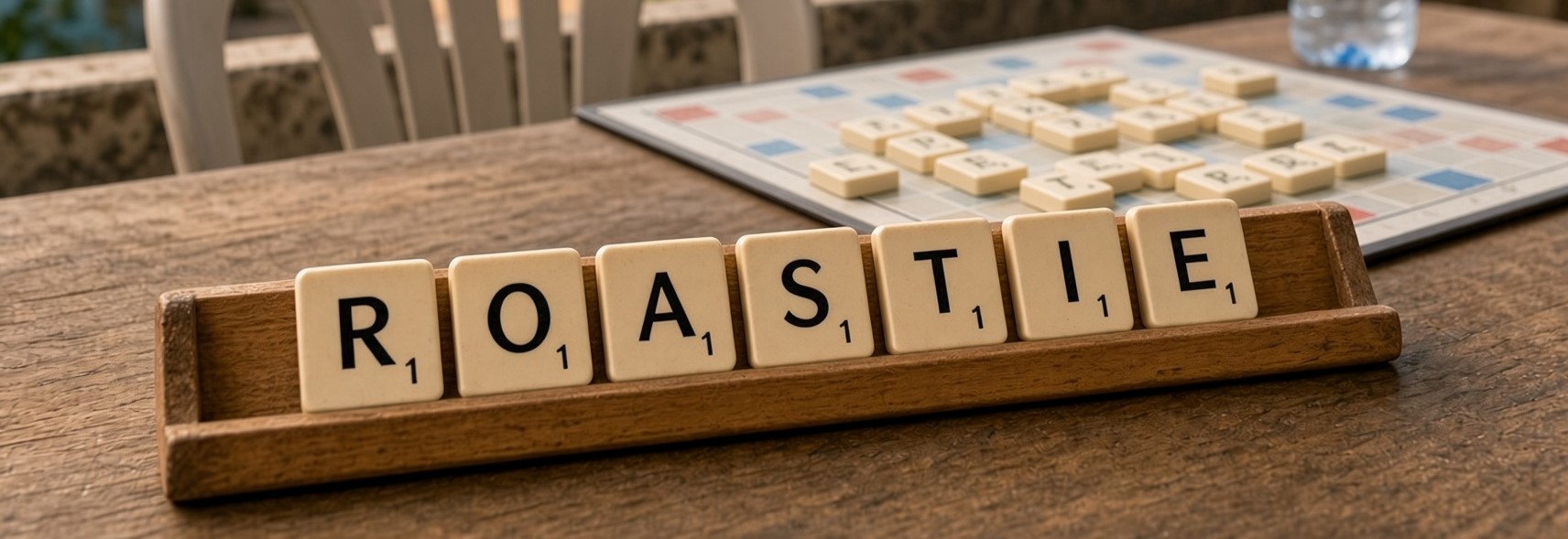
1. Executive Summary — Two Dictionaries, One Board
You know the board.
You know the tiles.
You know the bonus squares.
But the dictionary changed.
And the dictionary decides everything.
Don’t get discouraged.
Wordmaster.pro maps the structural differences between the North American NWL (NASPA Word List) and the international CSW (Collins Scrabble Words) lexicons so that competitive players can transition between systems without burning turns on illegal plays or missing high-value words that are suddenly available.
If you have only ever played under NWL rules — the standard in NASPA-sanctioned tournaments across the United States and Canada — you already know most of what CSW contains. NWL is close to a pure subset of CSW.
But “close” is not “identical.”
CSW24 contains 280,887 words. NWL2023 contains 196,601. That gap of roughly 84,000 words is not random padding. It includes high-utility two-letter words, powerful short plays with J, Q, X and Z, flexible vowel dumps, expanded plurals and comparatives, and hundreds of high-probability bingos that do not exist in North American play.
This article is a practical bridge guide. It tells you what to learn first, what changes about tile management, and where to watch for traps going in both directions.
2. The Two Lexicons at a Glance
| Detail | NWL2023 (North America) | CSW24 (International) |
|---|---|---|
| Governing body | NASPA | WESPA / Collins |
| Total words | 196,601 | 280,887 |
| 2-letter words | 107 | 127 |
| Current edition | NWL2023 (effective Feb 29, 2024) | CSW24 (effective Jan 1, 2025) |
| Source dictionaries | Merriam-Webster + collegiate dictionaries | Collins English Dictionary + NWL |
| Used at | US, Canada, Thailand tournaments | World Scrabble Championship, all WESPA events |
| Words in CSW but not NWL (2–8 letters) | — | 31,445 |
| Words in NWL but not CSW (2–8 letters) | 130 | — |
The asymmetry is stark. CSW adds roughly 31,000 playable short words that NWL does not recognize. Going the other direction, only 130 short words in NWL are missing from CSW. NWL is nearly a subset of CSW — but not perfectly.
3. The 20 Extra Two-Letter Words — Your First Priority
Two-letter words are the connective tissue of Scrabble. They enable parallel plays, tight hooks, and endgame dumps. CSW adds 20 that NWL players have never been allowed to use.
| Word | Meaning | Strategic impact |
|---|---|---|
| CH | Obsolete dialect pronoun (I) | C finally has a two-letter word. Huge for parallel plays. |
| ST | Interjection commanding silence | Unusual consonant pair; easy to miss over the board. |
| JA | Yes (affirmative) | J gains a second two-letter outlet alongside JO. |
| ZE | Gender-neutral pronoun | Z gains massive parallel and dump flexibility. |
| ZO | Tibetan yak hybrid | Second Z two-letter word; Z becomes far less dangerous. |
| DI | Plural of deus (gods) | D gains a vowel partner beyond DE and DO. |
| EA | Dialect word for river | Two-vowel word; useful for vowel-heavy racks. |
| EE | Scots word for eye | Two-vowel dump; helps clear double E. |
| FY | Interjection of reproach | Vowel-free; scores without needing a vowel. |
| GU | Shetland fiddle | G gains a U partner. |
| IO | Exclamation of joy or grief | Two-vowel dump word. |
| KO | Maori digging stick | K gains an O partner beyond KA and KI. |
| KY | Cattle (Scots) | Vowel-free; useful with K on tight boards. |
| NY | To approach (verb) | Vowel-free; opens N plays on closed boards. |
| OB | An objection | B gains a second vowel partner besides BI and BO. |
| OO | Scots word for wool | Double-vowel dump. |
| OU | Scots interjection of concession | Two-vowel dump. |
| UG | To dread or loathe (verb) | G gains a U partner; verb form takes -S. |
| UR | Interjection of hesitation | Additional vowel-consonant option. |
| YU | Precious jade (Chinese) | Y gains a U partner for tight plays. |
Which ones trip up NWL players the most?
CH and ST are the hardest to internalize because they feel wrong. In NWL, C has no two-letter word at all. ST looks like an abbreviation, not a play. FY, KY and NY are also easy to forget because they contain no vowels.
ZE and ZO are the most strategically significant. In NWL, Z has only ZA as a two-letter outlet. In CSW, Z suddenly owns three two-letter words. That makes the Z tile far more flexible and far less risky to hold.
4. Short JQXZ Words — Where the Biggest Scoring Shifts Live
Power tiles behave differently under CSW because they have more legal short plays available. The extra words are not obscure curiosities. They are high-scoring tactical options that change how you manage your rack.
J words (CSW-only highlights)
| Word | Length | Meaning |
|---|---|---|
| JA | 2 | Yes |
| JAI | 3 | Victory (Hindi) |
| JOR | 3 | Second movement in an Indian musical piece |
| JOL | 3 | To have a good time (South African) |
| BENJ | 4 | Benzoin resin |
| JOBE | 4 | To rebuke tediously |
Q words (CSW-only highlights)
| Word | Length | Notes |
|---|---|---|
| QIN | 3 | Chinese stringed instrument. The most useful CSW-only three-letter word by playability. |
| QINS | 4 | Plural of QIN. |
| WAQF | 4 | Islamic charitable endowment. Q without U. |
| FIQH | 4 | Islamic jurisprudence. Q without U. |
| QEEMA | 5 | Spiced minced meat dish. Q without U. |
| QORMA | 5 | Variant spelling of korma. Q without U. |
| TALAQ | 5 | Islamic divorce. Terminal Q — no U needed. |
The Q-without-U arsenal is broader under CSW. That single fact makes the Q tile significantly less dangerous internationally. NWL players who dread drawing Q should note that switching lexicons partly solves the problem.
X words (CSW-only highlights)
| Word | Length | Notes |
|---|---|---|
| EXO | 3 | Excellent; a shortened form. High playability. |
| WEX | 3 | To wax (archaic). |
| WOX | 3 | Past tense of wax (archaic). |
| ZEX | 3 | A tool for cutting roofing slates. |
| TEX | 3 | A unit of textile fibre density. |
Z words (CSW-only highlights)
| Word | Length | Notes |
|---|---|---|
| ZE | 2 | Gender-neutral pronoun. |
| ZO | 2 | Tibetan yak hybrid. |
| ZEA | 3 | A type of cereal grass. |
| ZEL | 3 | An Oriental cymbal. |
| DZO | 3 | Variant of ZO; yak hybrid. |
| ZOL | 3 | A hand-rolled cigarette (South African). |
5. Vowel Dumps — The Safety Net Gets Wider
One of the biggest practical differences between the two lexicons is the variety of short vowel-heavy words in CSW.
If your rack floods with vowels, CSW gives you more emergency exits:
| Word | Letters | Vowel count |
|---|---|---|
| EA | 2 | 2 |
| EE | 2 | 2 |
| IO | 2 | 2 |
| OO | 2 | 2 |
| OU | 2 | 2 |
| AIA | 3 | 3 |
| AUA | 3 | 3 |
| AUE | 3 | 3 |
| EUOI | 4 | 4 |
| EUOUAE | 6 | 6 |
EUOUAE — six vowels, zero consonants — is valid in CSW. It cannot rescue every broken rack, but it demonstrates how much wider the vowel dump toolkit becomes under the international list.
6. Plurals, Comparatives and Inflections — Where CSW Is More Generous
CSW allows more word endings than NWL in three important categories.
Extra plurals
Some NWL words that do not take -S in North America can be pluralized under CSW. Examples include OIS, AVAS and FEWS. This changes leave calculations — an S tile is even more versatile internationally because more base words accept it.
Extra comparatives and superlatives
CSW permits -ER / -EST or -IER / -IEST on adjectives that NWL blocks. Words like FIER (from FIE), OORIEST (from OORIE) and QUARER (from QUARE) are valid internationally.
Extra gerunds
CSW accepts more -ING forms. Some words that feel like obvious gerunds in English but are missing from NWL — such as GRADINGS — exist in CSW. This means the suffix partitioning techniques from earlier articles gain even more utility internationally.
7. High-Probability CSW-Only Bingos
Some common letter combinations produce bingos in CSW that have no valid anagram in NWL. These are among the most important words for an NWL player to study when preparing for international play.
| CSW-only bingo | Letters | Why it matters |
|---|---|---|
| NOTAIRE | AEINORT | Highest-probability CSW-only 7. Common letter set that makes nothing in NWL. |
| OTARINE | AEINORT | Same letter set as NOTAIRE; two bingos from one rack. |
| ETAERIO | AEEIO RT | A type of fruit. Vowel-heavy rack that is dead in NWL but alive in CSW. |
| ROASTIE | AEIORST | Very common stem letters; another CSW bingo from a familiar combination. |
| ORIGANE | AEGINOR | A plant. Common consonant-vowel balance produces a bingo NWL players miss. |
| ALERION | AEILNOR | A heraldic eagle. High-frequency letter set. |
| RESIANT | AEINRST | Resident (archaic). The famous AEINRST set gains another anagram. |
| STARNIE | AEINRST | Yet another AEINRST anagram valid only in CSW. |
That last pair is particularly notable. The AEINRST letter set — already the most famous bingo stem in Scrabble — produces even more playable words under CSW. NWL gives you NASTIER, RETAINS, RETINAS, STAINER and STEARIN. CSW adds RESIANT, STARNIE, ANESTRI and RETSINA (also NWL) among others.
8. The Reverse Trap — Words in NWL but Not CSW
The drift is not entirely one-directional. There are 3,698 words in NWL2023 that are not recognized by CSW24. Of those, 130 are between 2 and 8 letters long.
Most of the removed words are terms that Collins deemed offensive or insufficiently supported by dictionary evidence. A few are inflections that Collins handles differently.
The practical impact is small because the list is short. But an NWL player transitioning to CSW should be aware:
A word you have always played legally at home may be challenged off the board internationally.
There is no shortcut here except studying the short exclusion list. The Collins Coalition and NASPA both publish comparison cheat sheets that flag these differences clearly.
9. What Changes Strategically When You Switch Lexicons
Z management
In NWL, Z has one two-letter word: ZA. In CSW, Z has three: ZA, ZE, ZO. That triples the parallel-play options and dramatically reduces the risk of holding Z on a tight board.
Q management
CSW adds Q-without-U words like QIN, WAQF, FIQH, QEEMA, QORMA and TALAQ. The Q tile is still dangerous, but less so. NWL players who have been trained to dump Q urgently can afford to hold it slightly longer under CSW.
C management
In NWL, C has no two-letter word. In CSW, CH exists. That one addition changes how C interacts with parallel plays and tight endgame boards.
Vowel management
More two-vowel short words mean vowel-flooded racks have more exits. Rack triage is less punishing internationally.
Bingo frequency
More valid seven-letter words means bingos appear more often for both players. The fifty-point bonus economy runs hotter under CSW. Setup play and stem preservation become slightly more rewarding.
10. A Study Plan for NWL Players Moving to CSW
You do not need to memorize 84,000 new words. You need to learn the most useful ones in the right order.
Week 1 — The 20 two-letter words
Memorize them in groups:
- High-value: JA, ZE, ZO
- Vowel-free: CH, ST, FY, KY, NY
- Vowel dumps: EA, EE, IO, OO, OU
- Consonant partners: DI, GU, KO, OB, UG, UR, YU
Week 2 — Top CSW-only three-letter words
Start with the ten highest-playability additions:
QIN, EXO, JAI, ZEA, ZEL, WEX, WOX, DZO, ZEX, ZOL
Week 3 — Short JQXZ words (4–5 letters)
Study WAQF, FIQH, QEEMA, QORMA, TALAQ, BENJ, JOBE, and similar high-impact short plays.
Week 4 — High-probability CSW-only bingos
Focus on the top 20–30 by playability. Start with NOTAIRE, OTARINE, ETAERIO, ROASTIE, ORIGANE, ALERION, RESIANT, STARNIE.
Ongoing — Plurals, comparatives, vowel dumps
Add these gradually. They come up less predictably, but they accumulate into a meaningful edge over time.
11. Common Mistakes During Lexicon Transition
Mistake 1: Playing CSW words in an NWL tournament
Muscle memory is real. If you have been studying ZO and CH, your brain may offer them during a domestic event. Double-check the lexicon before every tournament.
Mistake 2: Ignoring the NWL-only exclusions
Assuming everything you know from NWL is safe in CSW is almost true — but not perfectly. Review the 130 short exclusions.
Mistake 3: Trying to learn everything at once
Eighty-four thousand words is overwhelming. Prioritize by word length and playability. Two-letter words first. Then threes. Then short JQXZ. Then bingos. That order mirrors how the game actually works.
Mistake 4: Forgetting that both players benefit
Under CSW, your opponent also has access to ZE, ZO, QIN and the rest. The advantage goes to the player who learned them first and spots them faster.
Mistake 5: Overvaluing obscure long words
A five-syllable CSW-only nine-letter word is less important than knowing CH, ST and QIN. Short words come up every game. Rare long words come up once a season.
12. The NWL-to-CSW Quick Guide
- NWL is nearly a subset of CSW. You already know most of the international dictionary.
- Learn the 20 extra two-letter words first. They change every game.
- Z becomes safer. Three two-letter outlets instead of one.
- Q becomes safer. More Q-without-U options.
- C gains CH. The tile is no longer stranded without a two-letter play.
- Vowel dumps are easier. More emergency exits for flooded racks.
- More bingos exist. Stems that produce nothing in NWL may produce playable words in CSW.
- 130 NWL words are not in CSW. Study the short exclusion list.
- Prioritize by length and frequency. Twos, threes, JQXZ, then bingos.
- Always confirm which lexicon governs your event.
Final Takeaway
The board is the same. The tiles are the same. The bonus squares are the same.
The dictionary is not.
If you are moving from NWL to CSW — for the World Championship, for international club play, or simply because your online platform uses Collins — the transition is manageable. NWL prepared you for most of it. The gap is real but structured: twenty two-letter words, a handful of powerful short plays, wider vowel dumps, and a richer bingo landscape.
Learn the short words first. Test the power tiles second. Add the bingos third. And always check which dictionary governs the room you are sitting in.
Leave a Reply