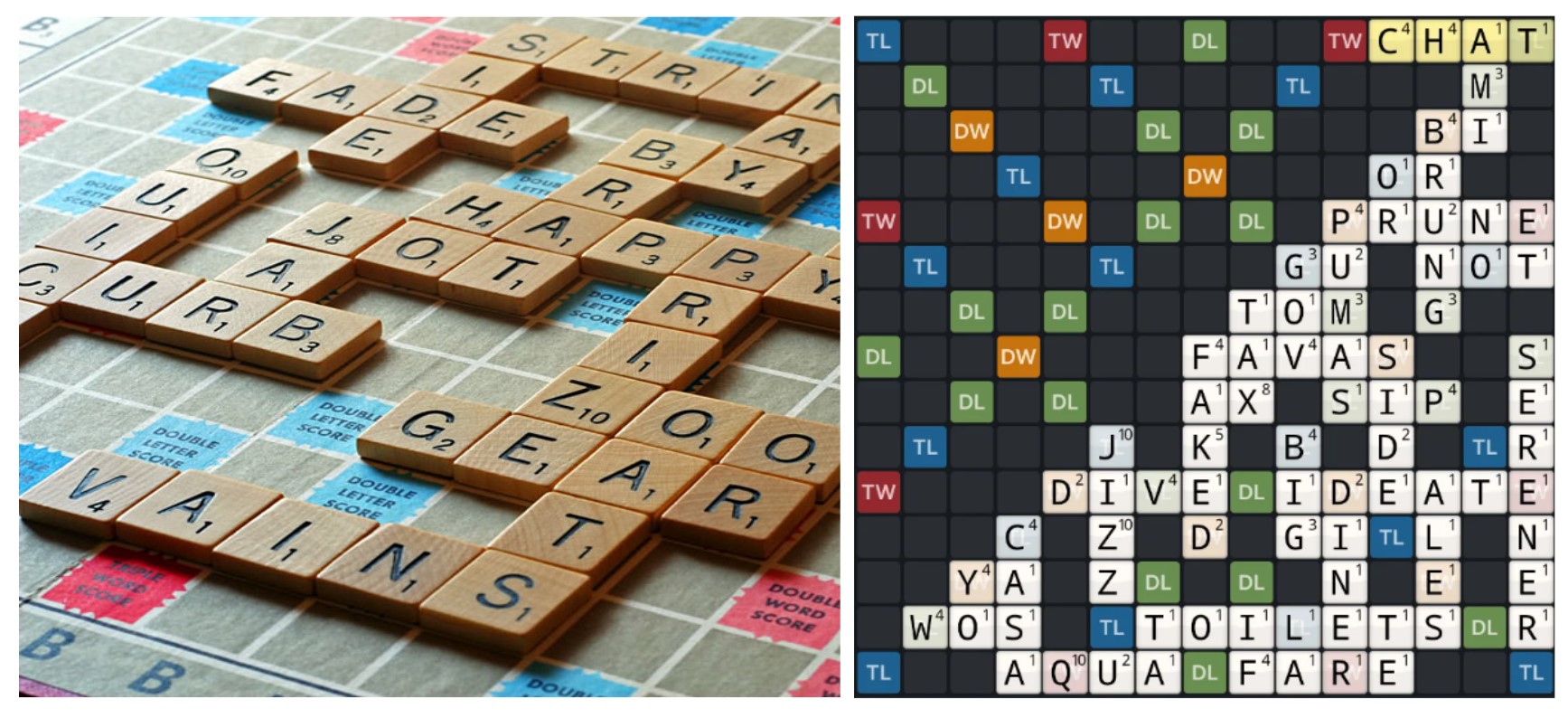
1. Executive Summary — The False Twin Problem
Wordfeud is not Scrabble on a phone.
Same 15×15 footprint. Different premium map.
Different tile prices. Different bingo tax.
Scrabble muscle memory becomes a liability.
Amateurs import corner races.
Masters remapped every lane.
Scan. Reprice. Deny. Adapt.
Wordmaster.pro analyzes the absolute mathematical structural grid discrepancy of dual-platform premium architectures in order to provide competitive players with an unshakeable offensive toolkit that spikes turn metrics without exposing dangerous open pathways to the opponent.
Wordfeud vs Scrabble is the most expensive misconception in modern competitive word play. Both games use a 15×15 matrix, seven-tile racks, and the same four premium families — Double Letter (DL), Triple Letter (TL), Double Word (DW), Triple Word (TW). That surface similarity hides structural discrepancy. The wordfeud board layout is not the Scrabble cathedral. The letter economy is not identical. The bingo bonus is not identical. Random boards break symmetry entirely.
Why Scrabble geometry fails on Wordfeud
| Habit imported from Scrabble | Wordfeud consequence |
|---|---|
| Corner TW races | Wrong corridors; missed local TW/TL clusters |
| C as “cheap consonant” | Under-scoring; C is a 4-point hunter |
| J held for later bingo | Surrendered TL spikes; J prices like a warhead |
| +50 bingo expectation | Mispriced clears; Wordfeud bingo is +40 |
| Memorized opening lengths | Random/standard mismatch; lane gifts |
This guide is the comparative operating system for scrabble grid geometry, wordfeud vs traditional scrabble, wordfeud random board play, premium square differences, and cross-platform board control strategy.
2. The Mathematics of Dual Grids: Structural Grid Discrepancy (SGD)
Structural Grid Discrepancy (SGD)
Structural Grid Discrepancy (SGD) measures how much a Scrabble-optimal move loses expected value when transplanted onto a Wordfeud map and scoring matrix.
SGD = EV_scrabble_script(play) − EV_wordfeud_reality(play)When SGD is large and positive, your Scrabble script looks strong on paper and weak on the actual board. That is the false-twin tax.
Three engines inside SGD
SGD ≈ ΔMap + ΔAlphabet + ΔBingo| Engine | What changes | Competitive effect |
|---|---|---|
| ΔMap | Premium coordinates / clustering | Wrong lanes defended and attacked |
| ΔAlphabet | Letter face values | Wrong tiles prioritized |
| ΔBingo | Full-rack bonus | Wrong clear thresholds |
Proof: identical word, divergent yield
Play the same seven-tile clear through a TL+DW hybrid geometry.
Scrabble lens
Face path (example)     = 62
Bingo bonus             = +50
Total                   = 112
Wordfeud lens (same tiles, Wordfeud letter prices, +40 bingo)
Face path (repriced)    = 68   ← C/B/P/J uplift can raise mid consonants / J
Bingo bonus             = +40
Total                   = 108
The totals look similar here. The strategic error is deeper: Scrabble players often decline the hybrid now to “save for a better bingo later,” while Wordfeud’s map may never recreate that TL+DW collision. ΔMap dominates ΔBingo.
Platform Divergence Matrix
| Dimension | Traditional Scrabble | Wordfeud Standard | Wordfeud Random |
|---|---|---|---|
| Grid size | 15×15 | 15×15 | 15×15 |
| Premium families | DL TL DW TW | DL TL DW TW | DL TL DW TW |
| Premium coordinates | Fixed classic map | Fixed non-Scrabble map | Reshuffled each game |
| Symmetry | High, learnable | Learnable but foreign | Broken by design |
| Bag size | 100 tiles | 104 tiles | 104 tiles |
| Bingo bonus | +50 | +40 | +40 |
| Opening rule | Cover center star | Cover center | Cover center |
| Primary skill | Map memory + rack equity | Remap + reprice | Cartography every game |
Premium Square Census — TW / DW / TL / DL
Both boards are 15×15 = 225 cells. The premium mix is not the same. Scrabble loads extra DW mass, including the center star. Wordfeud standard cuts DW to 12, raises TL to 20, and treats the center as a plain start cell — not a Double Word.
| Feature | Traditional Scrabble | Wordfeud Standard | Strategic delta |
|---|---|---|---|
| Grid cells | 225 | 225 | Identical footprint |
| TW | 8 | 8 | Same count; different seats |
| DW | 17 (16 + center star) | 12 | Wordfeud has 5 fewer word-doublers |
| TL | 12 | 20 | Wordfeud has 8 extra letter-triplers |
| DL | 24 | 24 | Same count; different seats |
| Center cell | DW (star) | Plain start (Θ) | Opening is not auto-doubled on Wordfeud |
| Total premiums | 61 | 64 + 1 start | Wordfeud is letter-premium heavy |
| Plain cells | 164 | 160 | Tighter premium density on Wordfeud |
Map law: Scrabble is a word-multiplier cathedral (more DW). Wordfeud is a letter-multiplier city grid (more TL). That is why C/J/X/Z dumps on Wordfeud explode harder in midboard than Scrabble muscle memory expects.
Tile-Bag Census — Count and Distribution
| Feature | Traditional Scrabble | Wordfeud (English) | Delta |
|---|---|---|---|
| Total tiles | 100 | 104 | +4 |
| Blanks | 2 | 2 | — |
| Rack size | 7 | 7 | — |
| Bingo bonus | +50 | +40 | −10 |
| Remaining after two opening racks | 86 | 90 | +4 in the pool |
Letter-count variations (English bags)
Only rows that differ are listed. Unlisted letters match Scrabble counts.
| Letter | Scrabble count | Wordfeud count | Shift |
|---|---|---|---|
| A | 9 | 10 | +1 |
| O | 8 | 7 | −1 |
| T | 6 | 7 | +1 |
| S | 4 | 5 | +1 |
| D | 4 | 5 | +1 |
| H | 2 | 3 | +1 |
| E / I / N / R / L / U | 12 / 9 / 6 / 6 / 4 / 4 | Same | — |
| B / C / M / P / F / V / W / Y | 2 each | Same | — |
| G | 3 | 3 | — |
| K / J / X / Q / Z | 1 each | Same | — |
Bag law: Wordfeud’s extra four tiles are mostly glue (A, T, S, D, H) with one O removed. Tracking late-game S and A density must be recalibrated. Do not import Scrabble remainder counts.
3. The Discrepancy Directory: Map, Alphabet, and Momentum
3A. Premium Map Divergence — Scrabble Cathedral vs Wordfeud City Grid
Traditional Scrabble geometry
Scrabble’s premium architecture is a sacred diagram:
- Corner and mid-edge TW altars
- Diagonal DW spines
- Interior TL/DL rings with stable distances from center
Elite Scrabble defense is built on counting empties to known TW coordinates and denying classic approach roads.
Wordfeud standard geometry
Wordfeud’s standard board keeps the same premium types but relocates them. Practically:
- Outer-third TW/TL corridors feel “scrambled” to Scrabble eyes
- Midboard hybrid collisions appear in unfamiliar places
- Corner-race instincts fire at empty threats while real threats sit one lane over
Operating rule: Before move one on Wordfeud standard, audit premiums as if you have never seen a Scrabble board.
Wordfeud random geometry
Random mode preserves the 15×15 contract and reshuffles premium seats. Clusters form. Dead zones form. One wing can own most TW+TL mass.
Random-board skill ≈ f(fresh scan, cluster control, lane denial)
Standard Scrabble skill ≈ f(memory, equity, known roads)
Those skill functions are not interchangeable.
Spatial footprint checklist
| Scan item | Scrabble | Wordfeud |
|---|---|---|
| Nearest TW from center | Memorized | Re-measure every game/mode |
| TL seats for J/Q/X/Z | Known rings | Remap before power dumps |
| Dual word-premium lines | Classic diagonals | Hunt afresh |
| Safe opening length | Book 4–5 often | Map-distance dependent |
3B. Alphabet Repricing — The Hidden Structural Discrepancy
Grid geometry decides where points explode. Letter values decide which tiles deserve obsession.
Critical face-value shifts (WordMaster Pro matrices)
| Letter | Scrabble | Wordfeud | Strategic rewrite |
|---|---|---|---|
| B | 3 | 4 | Premium-hunt more aggressively |
| C | 3 | 4 | Stop treating C as filler |
| G | 2 | 3 | Stronger mid-consonant |
| J | 8 | 10 | Top-tier warhead; TL urgency |
| P | 3 | 4 | Junior power tile near DL/TL |
| U | 1 | 2 | Heavier U tax/reward with Q |
| Q/Z | 10 | 10 | Geometry-first, still maximum face |
| X | 8 | 8 | Elite parallel/TL engine |
Hook and leave impact
Scrabble leave evaluation underprices Wordfeud C/B/P/J. Players “fish” while a TL seat dies. On Wordfeud, medium consonants become premium missiles. J joins Q/Z in urgency class.
Rack-management rewrite
Keep Threshold_wordfeud = f(tile face_wordfeud × open premium access)Not:
Keep Threshold_scrabble_memory3C. Bingo, Bag, and Tempo Discrepancies
| Factor | Scrabble | Wordfeud | Practical effect |
|---|---|---|---|
| Bingo bonus | +50 | +40 | Clears are still huge; hybrid premiums can outrank delayed bingo fishing |
| Tile bag | 100 | 104 | Slightly different late-bag density |
| Async mobile tempo | Rare in classic clubs | Default | Defense compounds across hours/days |
| Dictionary | NWL/CSW event-locked | Language pack dependent | Validate lexicon before phoney wars |
Bingo doctrine shift: On Scrabble, +50 often justifies stretching for sevens. On Wordfeud, a non-bingo C/J/Z hybrid on TL+DW can beat a speculative fish because the map may not wait.
Directory synthesis — wordfeud vs traditional scrabble
| Discrepancy class | Scrabble default | Wordfeud correction |
|---|---|---|
| Map memory | Asset | Liability until remapped |
| Corner TW obsession | Often correct | Frequently misplaced |
| Medium consonants | Steady | Explosive near premiums |
| J urgency | High | Extreme |
| Bingo threshold | +50 gravity | +40 + map hybrids |
| Random boards | N/A | Full cartographic reset |
4. Spatial Geometry: Cross-Platform Board Control
4.1 The Center Constant and the Opening Rewrite
Both platforms require the first word to cover the center. That is the only major opening constant.
After that, opening length is a distance-to-premium problem, not a Scrabble book problem.
| Center-to-hot-premium distance | Preferred open |
|---|---|
| Hot premium within 1–2 | Short choke / deny |
| Hot premium 3–4 away | Medium 4–5 equilibrium |
| Cold center neighborhood | Longer drain if leave is clean |
| Center | +1 | +2 | +3 | |
| Scrabble habit | ★ | Book length toward known DW/DL seats | ||
| Wordfeud rule | ★ | Measure actual nearest TW/TL before choosing length | ||
4.2 Lane Translation: 3-Tile Gaps Travel, Coordinates Do Not
The 3-tile gap trap logic from Scrabble defense still applies on Wordfeud:
[Hard Anchor] · · · [TW]What does not travel is the memorized location of that TW. On Wordfeud standard, recount. On random, recount every match.
Cross-platform defensive law
- Identify live TW cells on this board.
- Measure empties from your terminals.
- Prefer fortified anchors (V/J/Q/C/W) facing those cells.
- Never assume a Scrabble-safe coordinate is Wordfeud-safe.
4.3 Hybrid Multiplier Hunting
Wordfeud and other mobile grids reward hybrid collisions: letter premium plus word premium in one realistic word length.
Priority scan
- TL/DL seats that can host J/C/P/X/Z
- Nearby DW/TW on the same axis
- Parallel crosses that also touch premiums
- Opponent bridges into the same collision zone
Scrabble players overvalue pure length. Wordfeud rewards compressed geometry that stacks multipliers.
Hybrid EV = (repriced face × letter mults × word mults) + crosses + bingo?If hybrid EV now exceeds speculative bingo EV later, take the hybrid.
5. Case Studies: The Imported Corner Race vs. The Remapped Denial
Case Study A — The Imported Corner Race
Platform: Wordfeud standard.
Player habit: Classic Scrabble corner TW race.
Play: Extends toward a Scrabble-memorable corner corridor for modest points, ignoring a nearer Wordfeud TW/TL cluster on the outer third.
Sequence
- Player “controls” a dead Scrabble fantasy lane.
- Real Wordfeud premium cluster stays open.
- Opponent seats J on TL into DW for a spike.
- Momentum flips.
Autopsy
| Metric | Result |
|---|---|
| Map used | Scrabble memory |
| Map required | Wordfeud actual |
| SGD | High |
| Result | Structural collapse |
Diagnosis: False-twin error. Same grid size. Wrong cathedral.
Case Study B — The Remapped Denial
Platform: Wordfeud (standard or random).
Master process: Full premium audit before scoring optimization.
| Step | Action |
| 1 | Locate every TW/TL/DW/DL on this board |
| 2 | Mark hottest hybrid collision |
| 3 | Deny opponent bridge with short rigid seal |
| 4 | Cash own C/J/Z premium only after lane is safe |
Results
| Metric | Result |
|---|---|
| Immediate score | Moderate |
| Opponent spike denied | Yes |
| Alphabet pricing | Wordfeud-correct |
| Board control | Retained |
Diagnosis: Remapped denial. Geometry first. Points second. That is elite wordfeud board layout literacy.
Extraction principle: A 16-point Wordfeud seal that deletes a 50-point opponent hybrid beats a 28-point Scrabble-script extension into a dead lane.
6. The Cross-Platform Pre-Play Protocol
Execute this before every Wordfeud move if you were raised on Scrabble.
0–5 seconds — Identify the map
- Standard or random?
- Where are TW cells this game?
- Where are TL seats for J/C/P/X/Z?
- Any dual word-premium lines?
5–10 seconds — Reprice the rack
- Recalculate C/B/P at 4.
- Treat J as 10-point urgency.
- Recompute U tax at 2.
- Ask whether a hybrid now beats a bingo fish.
10–15 seconds — Choose geometry
- Measure center-to-hot-premium distance for opens.
- Apply 3-tile gap logic only toward actual TW cells.
- Prefer denial of opponent hybrids over vanity length.
- Confirm bingo math uses +40, not +50.
Ultra-scannable gate
- Am I looking at Scrabble coordinates by habit?
- Did I re-audit premiums on this board?
- Did I reprice C/B/P/J/U?
- Is a hybrid collision open for either side?
- Does my play seal or donate that collision?
- Is my bingo threshold using +40?
- If any Scrabble reflex remains unexamined, stop and remap.
Final operating rule
Wordfeud and Scrabble share a skeleton.
They do not share a nervous system.
Structural grid discrepancy is map plus alphabet plus bingo.
Wordfeud vs Scrabble mastery is remapping, not translating slang.
Premium square differences punish memory without measurement.
When you switch platforms, retire the cathedral map.
Scan the city grid in front of you.
Reprice the tiles in your hand.
Play the board that exists.
Leave a Reply