1. Executive Summary — The Max-Value Extraction
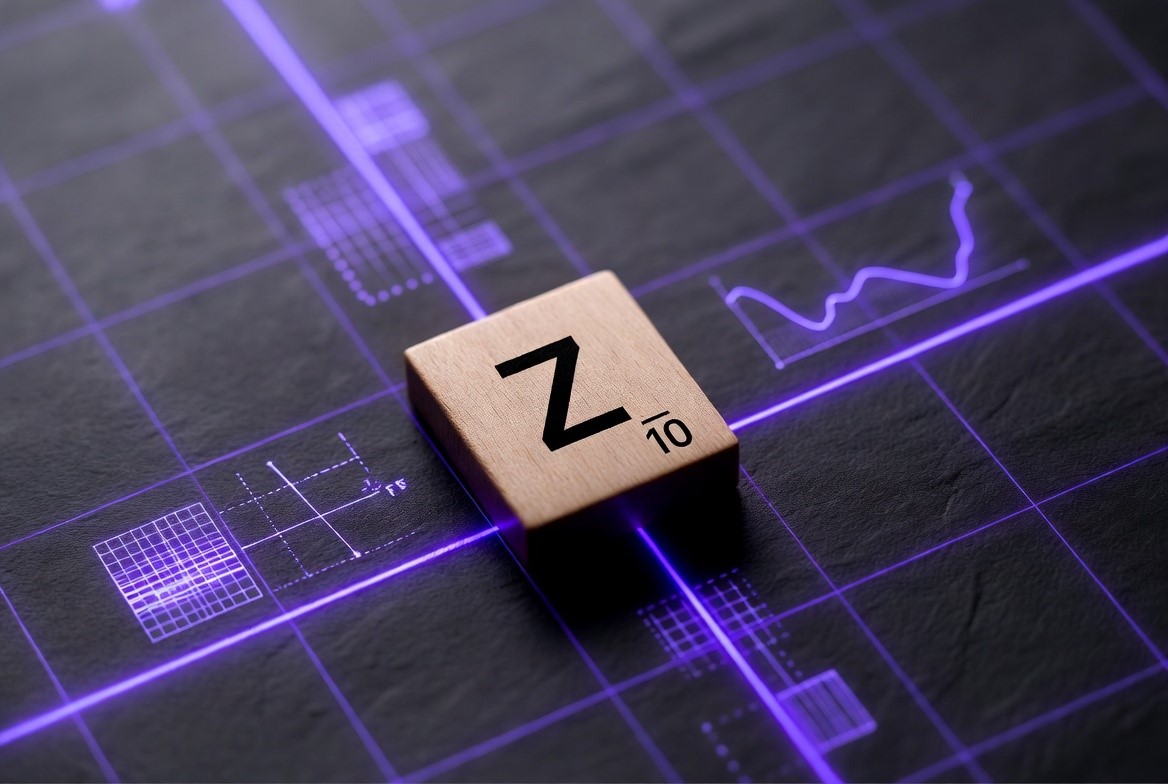
The Z is not a luxury. It is compressed fuel.
Ten points on one face.
One tile that warps a turn.
Amateurs hoard it for theater.
Masters cash it for leverage.
Short. Tight. Doubled. Gone.
Wordmaster.pro analyzes the absolute mathematical micro-spatial point compounding of short ‘Z’ structural blocks in order to provide competitive players with an unshakeable offensive toolkit that spikes turn metrics without exposing dangerous open pathways to the opponent.
The Z is the cleanest example of power tile maximization in modern word play. It does not need a seven-letter runway. It needs one premium square, one legal vowel partner, and one square inch of discipline. That is the heart of z words scrabble strategy.
Hoarding the Z kills tempo. You wait for a long word. The board tightens. The premium square disappears. Your leave rots. Your other six tiles lose flexibility because every line must now justify a ten-point hostage. That is not patience. That is equity bleed.
Why hoarding the Z ruins turn equity
Length seduces weak players. Short geometry rewards strong ones.
| Z state | Typical result |
|---|---|
| Z dumped on premium now | 20–40+ scored; rack reopened |
| Z held for 2–4 turns | zero LMV captured; leave decays |
| Z forced into flat late dump | 10–18 only; often defensive |
| Z parallel overlay | high yield; board remains tight |
A trapped Z also blocks consonant purging. You stop draining other clunky tiles because every turn is warped around the fantasy of one spectacular word. Meanwhile the opponent keeps taking normal points. That is how a ten-point tile quietly costs thirty-five.
The zenith thesis
High scoring z words are usually short. They live on squeezed boards. They thrive through parallel overlays, choke-point insertions, and one-cell multiplier theft. A legal ZA or ZO lane on a DLS often beats a larger, flatter word that burns more tiles and opens more air.
This guide is the practical operating system for 3 letter z words, 4 letter z words scrabble, words with friends z plays, and wordfeud z strategy when the board is clogged and the clock is live.
2. The Mathematics of the Z-Tile: Micro-Spatial Point Compounding
Micro-Spatial Point Compounding (MPC)
Micro-Spatial Point Compounding (MPC) is the process of landing a 10-point tile at a parallel intersection so it scores in two directions simultaneously, doubling its raw value to 20 baseline points before adding any premium box multipliers.
MPC = Sum of all scored axes touched by Z
      ÷ tiles you spent to create them
If the Z touches two words at once, its ten face points are counted twice.
10 + 10 = 20 baselineIf the Z sits on DLS in both scored axes:
(10×2) + (10×2) = 40 from Z aloneThat is the central law of micro-spatial point compounding.
Proof: short ZA on DLS vs. long 6-letter flat word
Scenario A — flat 6-letter play
Play a respectable six, unmultiplied, for 24.
Tiles used: 6.
Board real estate occupied: 6 cells.
Scenario B — ZA parallel on DLS
Board has a tight vowel seam. You place Z on DLS, forming ZA horizontally and ZA vertically through one legal junction.
Axis 1: Z(10×2) + A(1) = 21
Axis 2: Z(10×2) + A(1) = 21
Total  = 42
Tiles used: 1 new tile if the A is already on board, or 2 total if you build ZA from rack.
Board real estate occupied: 1–2 cells.
Compared with the six-letter flat 24:
- Raw score gain: 42 vs. 24
- Space used reduction: from 6 cells to 1 cell in the ideal overlay
- Spatial savings: about 83%
If you build ZA as a two-tile move instead of a one-tile overlay, you still consume only 2 cells, which is about 67% less board real estate than a 6-letter line. In tight corners, that difference is the whole turn.
Why short Z beats long Z on clogged boards
On open boards, long words can be fine. On clogged boards, premium contact dominates. The Z does not need support length. It needs:
- A legal vowel partner.
- A premium letter square.
- A closed exit path.
That is why z words scrabble strategy is mostly a study of compression, not expansion.
Z-Tile Velocity Engine
Safety Grade: A = closed, low hook risk · B = manageable · C = extension-sensitive.
| Playable Z-Word | Letters Consumed | Multiplier Target | Baseline Point Yield | Defensive Safety Grade |
|---|---|---|---|---|
| ZA | 1–2 | DLS / overlay junction | 21–42 | A |
| ZAG | 2–3 | DLS on Z | 23–33 | B |
| ZAP | 2–3 | DLS on Z | 24–34 | B |
| ZAS | 2–3 | DLS on Z | 22–32 | C |
| ADZ | 2–3 | TLS or DLS on Z | 23–43 | B |
| WIZ | 2–3 | DLS on Z | 25–35 | B |
| FEZ | 2–3 | DLS on Z | 25–35 | B |
| COZ | 2–3 | DLS on Z | 24–34 | B |
| ZAX | 2–3 | DLS/TLS on Z | 30–50 | B |
| WHIZ | 3–4 | DLS on Z | 29–39 | B |
| ZERO | 3–4 | DLS on Z | 23–33 | A |
| ZEAL | 3–4 | DLS on Z | 23–33 | A |
| CZAR | 3–4 | DLS on Z | 24–34 | B |
| OOZY | 3–4 | DLS on Z | 23–33 | B |
| QUOZ | 3–4 | DLS/TLS on Z | 32–52 | C |
Use the top of this table first. Every extra cell you occupy on a clogged board is a tax.
3. The Zenith Directory: Short-Form Z-Tile Outlets
The public directory below focuses on elite short outlets that actually carry power tile maximization value in live competitive settings.
3A. The 2-Letter Baseline Anchor — ZA
ZA
Definition: Slang contraction of pizza.
Lexicon legality
| Lexicon | Status |
|---|---|
| NWL / TWL | Valid |
| CSW | Valid |
| WWF | Valid |
Terminal Hook Liabilities
| Direction | Extensions | Risk |
|---|---|---|
| Back | ZAG, ZAP, ZAS, ZAX | Moderate |
| Front | Minimal | Low |
Spatial Footprint
This is the most important Z dump in competitive play. Full stop. If the board offers an exposed A, especially on a DLS lane, ZA is the first scan item. It uses almost no space, cashes the full ten-point face immediately, and keeps the board closed better than nearly any longer Z construction.
Baseline rule: If you know only one Z word, know ZA.
3B. The 3-Letter Shock Weapons — ZAG · ZAP · ZAS · COZ · FEZ · LEZ · WIZ · ADZ · ZAX
These are the live 3 letter z words that matter when the board is choked and the Z must produce now.
| Word | Definition (short) | NWL | CSW | WWF | Primary hook risk |
|---|---|---|---|---|---|
| ZAG | sharp turn | ✓ | ✓ | ✓ | ZAGS |
| ZAP | strike suddenly | ✓ | ✓ | ✓ | ZAPS |
| ZAS | plural of ZA | ✓ | ✓ | ✓ | front vowel lanes |
| COZ | because | ✓ | ✓ | ✓ | low |
| FEZ | brimless cap | ✓ | ✓ | ✓ | FEZZES path later |
| LEZ | lesbian (informal) | lexicon-variable | ✓ | often ✓ | context and register |
| WIZ | expert; wizard | ✓ | ✓ | ✓ | WIZES |
| ADZ | cutting tool | ✓ | ✓ | ✓ | low |
| ZAX | roofing tool | ✓ | ✓ | ✓ | low |
Group-wide legality notes
This tier splits into two subfamilies:
- Universal tournament tools: ZAG, ZAP, ZAS, COZ, FEZ, WIZ, ADZ, ZAX
- Lexicon-variance item: LEZ
For public tournament prep, memorize the universal set first. Treat LEZ as a lexicon-specific bonus, not a baseline anchor.
Terminal Hook Liabilities
Short Z words are strong because they exit fast, but the opponent can still hijack sloppy endings.
| Pattern | Example | Practical risk |
|---|---|---|
| S-back hook | ZAGS, ZAPS, ZAS base | Moderate on open rays |
| Plural growth | WIZ → WIZES | Medium |
| Vowel-front growth | ADZ beside open E or I lanes | Low–moderate |
| Register / lexicon issue | LEZ | Validate before use |
Structural Footprint
This group excels in choked sectors because each word can be parked beside a single live vowel or short consonant-vowel seam.
- ZAG / ZAP: best when A is already present.
- COZ / FEZ / WIZ: best as compressed side-dumps.
- ADZ / ZAX: excellent when the board offers awkward consonant neighbors and you want a high raw baseline.
- ZAS: useful when ZA is already on the board and the plural lane is safe for you, not your opponent.
Compressed-board rule: Prefer the version that leaves no floating plural lane toward a TWS.
3C. The 4-Letter Strategic Overlays — ZETA · ZERO · ZEAL · ZEKS · AZON · CZAR · MOZO · OOZY · QUOZ · WHIZ
This is the 4 letter z words scrabble tier: slightly wider footprint, still premium-hungry, still built for clogged sectors.
| Word | Definition (short) | NWL | CSW | WWF | Primary hook risk |
|---|---|---|---|---|---|
| ZETA | Greek letter | ✓ | ✓ | ✓ | ZETAS |
| ZERO | nothing | ✓ | ✓ | ✓ | ZEROS |
| ZEAL | eager energy | ✓ | ✓ | ✓ | low |
| ZEKS | Soviet prisoners (hist.) | ✓ | ✓ | lexicon-variable | ZEK stem |
| AZON | azo compound fragment | ✓ | ✓ | lexicon-variable | low |
| CZAR | ruler | ✓ | ✓ | ✓ | CZARS |
| MOZO | sharp dresser | ✓ | ✓ | ✓ | MOZOS |
| OOZY | flowing slowly | ✓ | ✓ | ✓ | open Y hooks nearby |
| QUOZ | absurdity / oddity | lexicon-variable | ✓ | often no | register-specific |
| WHIZ | move quickly; expert | ✓ | ✓ | ✓ | WHIZZ / WHIZES families |
Group-wide legality notes
Four-letter Z overlays break into three levels:
| Level | Words | Use case |
|---|---|---|
| Core universal | ZETA, ZERO, ZEAL, CZAR, MOZO, OOZY, WHIZ | Daily tournament memory |
| Useful but lexicon-check | ZEKS, AZON | Advanced study set |
| CSW-leaning / variance-heavy | QUOZ | Specialist item only |
Terminal Hook Liabilities
| Pattern | Example | Risk |
|---|---|---|
| Straight plural | ZERO, CZAR, MOZO | Moderate |
| Morphological family growth | WHIZ | Medium |
| Lexicon-specific trap | QUOZ | High if misremembered |
| Y-edge exposure | OOZY | Medium if board stays open |
Structural Footprint
These overlays belong in narrow channels, not fresh runways.
- ZERO / ZEAL: cleanest strategic dumps when a premium is available but no overlay cross exists.
- CZAR / MOZO: strong when consonant packing around the lane already limits replies.
- OOZY: best when you need to purge Z with sticky vowels.
- WHIZ: elite when H or I already exists and the Z can sit on premium.
Sector rule: If a four-letter Z play opens more than one new attachment point, it is no longer an overlay. It is a liability.
Directory synthesis — z words scrabble strategy
| Priority | Words | Role |
|---|---|---|
| Absolute anchor | ZA | first-line extraction |
| A-based shock set | ZAG, ZAP, ZAS, ZAX | premium-adjacent pressure |
| Tight utility set | COZ, FEZ, WIZ, ADZ | compressed board drains |
| Clean overlay fours | ZERO, ZEAL, CZAR, WHIZ | medium-width premium cash |
| Vowel rebalance fours | OOZY, ZETA, MOZO | leave repair with scoring |
| Specialist variance set | LEZ, ZEKS, AZON, QUOZ | lexicon-dependent edge tools |
This is the practical map for high scoring z words on clogged boards.
4. Spatial Positioning: The High-Velocity Sandwich
The Z should behave like a scalpel, not a parade float. Tight boards reward compressed insertion.
4.1 The Parallel Overlay Cross
Objective: Slide a short Z word flush against a vowel row so the Z participates in multiple micro-words at once.
Protocol
- Locate a row with one or two exposed vowels.
- Check whether a single Z can form legal 2-letter or 3-letter products in both directions.
- Prioritize A first. Then O. Then specialist seams.
- Reject the play if any cross is phoney in the event lexicon.
Canonical overlay — ZA counted twice
| Col A | Col B | |
| Board row | A | · |
| Board column | A | · |
| Your play | Z | · |
| Axes scored | ZA across + ZA down | |
That is micro-spatial point compounding in its purest form.
4.2 Multiplier Interception
Objective: Land the Z on TLS or DLS while preventing a return runway to a nearby TWS.
Protocol
- Count spaces from the premium backward, not forward.
- Choose the shortest legal word that plants Z exactly on the letter multiplier.
- Inspect both ends of the new word for easy one-letter growth.
- If the word leaves an open TWS lane, downgrade it immediately.
Interception ranking
| Play type | Interception quality | Why |
|---|---|---|
| Single-cell overlay ZA on DLS | Excellent | score spikes, lane stays shut |
| ADZ / ZAX / WHIZ on TLS | Strong | big baseline, moderate control |
| Flat 4-letter ZERO on open row | Medium | safe only if exits are sealed |
| Long Z showcase to TWS corridor | Poor | opponent inherits runway |
Multiplier rule: The best Z play is not the longest one. It is the one that captures the letter premium and kills the reply.
4.3 Consonant Squeeze
Objective: Purge the Z alongside awkward vowels or dead consonants without opening new corners.
Protocol
- Assess whether the rack is vowel-heavy or consonant-heavy.
- Match the Z word to the balancing problem.
- Prefer plays that remove the Z plus one awkward companion.
- Avoid plays that leave a stranded U, duplicate O, or floating plural lane.
Rack-balance map
| Rack problem | Best Z exits |
|---|---|
| Too many A-helpers | ZA, ZAG, ZAP, ZAS |
| Sticky O cluster | COZ, MOZO, OOZY |
| Heavy consonant clump | ADZ, ZAX, CZAR |
| Mixed premium hunt | WHIZ, ZERO, ZEAL |
That is how consonant purging and point production work together. You do not merely score. You restore future options.
5. Case Studies: The Hoarding Error vs. The Compressed Zenith
Case Study A — The Hoarding Error
Rack: contains Z with semi-playable support.
Board: modestly clogged, several temporary vowel seams visible.
Player decision: Hold the Z for four turns chasing ZODIAC or a similar showcase line.
Sequence
- Turn one: no Z play taken.
- Turn two: premium lane closes.
- Turn three: rack becomes harder to drain.
- Turn four: player is forced into a weak defensive 14.
Autopsy
| Metric | Result |
|---|---|
| Turns spent hoarding | 4 |
| Premium captures missed | multiple |
| Final Z score | 14 |
| Board state | worse than before |
| Net equity loss | about −35 |
This is the classic hoarding error. The player respected the face value of the Z but ignored its timing value. On clogged boards, a delayed Z usually loses more than it gains.
Case Study B — The Compressed Zenith
Rack: balanced leave plus Z.
Board: tight corner, open A, DLS under the future Z cell.
Master decision: Drop ZA parallel, with the Z counted twice.
| 1 | 2 | |
| Before | A | · |
| Parallel seam | A | · |
| After | Z | · |
| Score | ZA 16+1 + ZA 16+1 = 34–42 depending on local premium path | |
Results
| Metric | Result |
|---|---|
| Tiles spent | 1–2 |
| Score | 32+ instant class, often higher |
| Board state | sealed |
| Rack health | balanced for bingo chase |
| Opponent counter-lane | denied |
This is the compressed zenith. Minimal space. Maximal spike. Future leave preserved. That is elite wordfeud z strategy.
Extraction principle: A compressed ZA overlay on premium beats a delayed showcase Z word whenever the longer play opens air or misses the premium cycle.
6. The Speed-Recall “Z” Matrix Cheat Sheet
Twenty highest-yield Z plays for clogged boards and fast clocks.
2-Letter — baseline anchor (1)
- ZA — the most important Z dump in the game
3-Letter — shock weapons (9)
- ZAG — A-based turn burst
- ZAP — premium striker
- ZAS — plural pressure tool
- COZ — compact side dump
- FEZ — clean high-baseline outlet
- LEZ — lexicon-specific specialist
- WIZ — high-utility expert dump
- ADZ — tool word; strong raw yield
- ZAX — roofing tool; premium hunter
4-Letter — strategic overlays (10)
- ZETA — tidy Greek-letter dump
- ZERO — safest common overlay
- ZEAL — clean leave stabilizer
- ZEKS — tournament-specific specialist
- AZON — advanced lexicon edge
- CZAR — tight consonant sector play
- MOZO — O-heavy rack relief
- OOZY — vowel purge with score
- QUOZ — CSW-leaning specialist
- WHIZ — premium-friendly overlay star
10-second deployment checklist
- Spot the Z. Enter extraction mode.
- Scan for exposed A first.
- Check DLS/TLS under the Z cell.
- Prefer overlay score over flat length.
- Reject any play opening a TWS runway.
- Match the word to rack-balance needs.
- Maximize MPC, not drama.
Final operating rule
The Z is compressed scoring fuel. Not a collector’s tile.
Micro-spatial point compounding wins tight boards.
Parallel overlays beat decorative length.
Power tile maximization means cashing the ten now.
When the board clogs, do not hoard the Z.
Hit the premium.
Seal the lane.
Take the zenith.
Leave a Reply