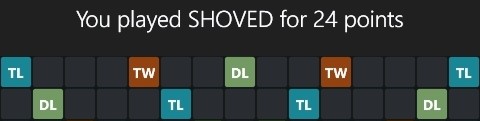
If you learned word gaming on a wooden Scrabble board, your instincts are valuable — and incomplete. Mobile titans like Wordfeud and Words With Friends (WWF) are not “Scrabble with a touchscreen.” They are different scoring economies built on different maps.
The boards still look familiar: a 15×15 grid, premium squares, seven tiles on a rack. Beneath that surface, three structural shifts rewrite optimal play:
- Custom board layouts — Triple Word (TW), Double Word (DW), Triple Letter (TL), and Double Letter (DL) squares do not sit where Scrabble veterans expect them.
- Modified letter point values — the same tile is not always worth the same points from game to game.
- Altered multiplier geometry — high-value corridors open, close, and “detonate” in patterns that punish classic Scrabble muscle memory.
Success on mobile is not about playing harder Scrabble. It is about remapping your strategy to each custom grid — reading where the board wants explosive scores, and refusing to donate those lanes to your opponent.
This WordMaster Pro field guide breaks down the board discrepancies, teaches the mathematics of stacked multipliers (the legendary “Double-Double”), and gives you a power-tile adjustment chart keyed to real scoring differences across Scrabble, Wordfeud, and Words With Friends.
Section 1 — Breaking Down the Board Discrepancies
Scrabble’s classic geography (your mental default)
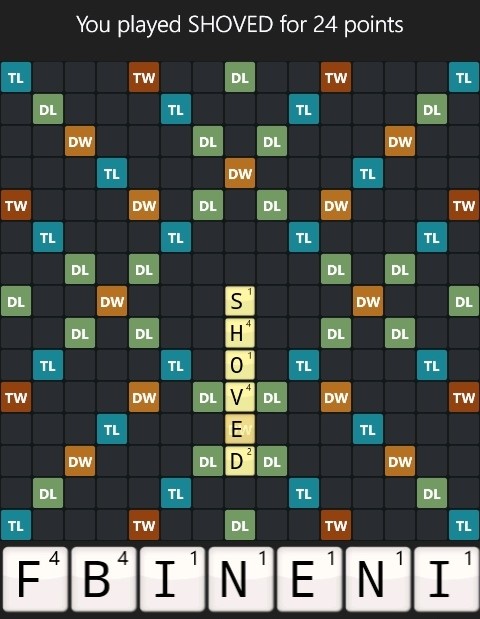
Standard Scrabble trains a specific spatial intuition:
- TW squares anchor the four corners and selected outer positions, creating a long-range “edge threat” culture.
- Premium lanes often reward extended bingos that stretch toward corners.
- Many intermediate players internalize one mantra: protect the corners; don’t open cheap TW access.
That mantra is still useful. It is not portable without modification.
Wordfeud: scrambled premiums and dangerous outer corridors
Wordfeud deliberately diverges from Scrabble’s premium map. The practical competitive consequence is not trivia — it is lane control.
On Wordfeud, TW and TL squares are redistributed, with critical high-density premiums pushed into patterns that feel “scrambled” to Scrabble minds. In play terms, that often means:
- Outer-edge scoring corridors become hotter earlier.
- A modest three- or four-letter dump can touch a TL under a power tile while simultaneously threatening a nearby TW lane.
- “Safe-looking” openings along the rim are frequently not safe at all — they are invitations to a 50–80 point swing on the next turn.
Think of Wordfeud less like a cathedral with sacred corner altars, and more like a city grid where the high-rent intersections have moved. If you keep playing for Scrabble corner races while ignoring Wordfeud’s actual TW/TL geometry, you will:
- Under-score your own racks (missing local TL×power-tile detonations), and
- Over-open lethal corridors your opponent understands better than you do.
Wordfeud mastery habit: Before every play, ask two board questions Scrabble reflexes skip:
- Which TL squares become reachable for J/Q/X/Z after this placement?
- Does this play create a one-move bridge into a TW corridor on the outer third of the board?
If either answer is “yes for them, no for me,” rethink the dump.
Words With Friends: the tighter matrix that rewards explosion
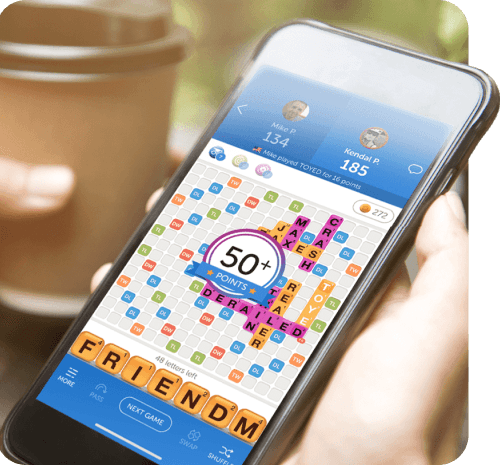
Words With Friends uses another non-Scrabble premium layout — one many competitive mobile players experience as a tighter scoring matrix. Premiums are arranged so that mid-length words and parallel plays collide with multipliers more often than casual players expect.
The strategic feel of WWF is swing-heavy:
- Boards “ignite” faster because premium interactions are more frequently available without needing a full corner march.
- Parallel plays and short hooks can stack letter premiums into outsized turns.
- Defensive play matters earlier; a single loose opening can unlock a chain of explosive replies.
Where Scrabble often rewards long positional patience toward classic TW races, WWF frequently rewards immediate multiplier literacy — knowing which squares convert a normal 18-point word into a 40-point problem for your opponent.
WWF mastery habit: Track “loaded lanes,” not just open hooks. A loaded lane is any row/column where a DW/TW and a TL/DL sit close enough that a realistic rack can touch both families of premium in one turn or on consecutive turns.
The unifying principle
Across both apps, the elite adjustment is identical:
Stop memorizing Scrabble’s map. Start memorizing this game’s multiplier topology.
Same letters. Same dictionary habits. Different battlefield.
Section 2 — The Art of the “Double-Double”
Multipliers are not decorations. They are a compounding engine. Understanding the order of operations is what separates hopeful dumps from calculated detonations.
Scoring order (never forget this)
For a single main word:
- Apply letter multipliers (DL/TL) to the tiles that cover them.
- Sum the word’s adjusted letter total.
- Apply word multipliers (DW/TW) for each word-premium square the main word covers.
- Add any legal crossword scores (each cross is calculated with the same logic on its own premiums).
- Add bingo bonuses when applicable.
Word multipliers stack by multiplication, not addition. That is the entire secret of the Double-Double.
The Double-Double defined
A Double-Double occurs when one play covers two Double Word squares. Because each DW multiplies the word by 2:
2 \times 2 = 4
Your word value is quadrupled (before crosswords and bingos).
Example (simplified face values, no letter premiums):
- Word face total: 20
- One DW: 20 \times 2 = 40
- Double-Double (two DWs): 20 \times 2 \times 2 = 80
That is not a “nice extra.” That is a game-state rewrite.
Triple-level nightmares (and dreams)
The same math scales harder with TW:
| Word premiums covered | Multiplier effect |
|---|---|
| 1 DW | ×2 |
| 2 DW (Double-Double) | ×4 |
| 1 TW | ×3 |
| 1 TW + 1 DW | ×6 |
| 2 TW | ×9 |
Mobile boards that place multiple word premiums within realistic word lengths make these collisions more than theoretical. Strong players do not “hope” for them — they shape the board toward them: soft setup plays that leave a lane only they can finish, or force the opponent into opening the lane under pressure.
The hybrid detonation: TL power tile + DW/TW word
The most practical high-percentage explosion in Wordfeud and WWF is often not a pure Double-Double. It is a hybrid:
- Park a power tile (Z, J, Q, X) on a Triple Letter square, and
- Land the main word across a Double Word (or TW) square.
Worked pattern:
- Base tile values for a short word: say 26 face points including a Z.
- Z sits on TL: that Z’s contribution becomes 10 \times 3 = 30 instead of 10 (net +20 to the letter stage, depending on exact word composition).
- After letter adjustment, suppose the word subtotal is 46.
- Main word covers DW: 46 \times 2 = 92.
- Add parallel crosswords (especially if those crosses also touch premiums), and a “small” play becomes a match-deciding spike.
This is why power-tile management on mobile is inseparable from multiplier mapping. Holding Z “for a bingo later” can be correct in Scrabble endgames and disastrous on a Wordfeud board where a TL+DW hybrid is available now and will be stolen next turn if you pass it up.
Crossword multipliers: the hidden second engine
Elite players calculate the main word and every cross. A parallel play that:
- puts X on TL in the main word, and
- simultaneously creates a two-letter cross that also benefits from a premium,
is how “ordinary” racks print elite scores. Multiplier mastery is density plus geometry: more words scored, on better squares, in one turn.
Practical Double-Double checklist
Before you tap Play, run this five-second audit:
- How many word multipliers does this placement cover?
- Which letter multipliers sit under my highest tiles?
- Can I rearrange the same word to move Z/J/Q/X onto TL/DL?
- What Double-Double or TL+DW lane am I opening for the opponent?
- Is a slightly lower score this turn worth denying a ×4 or ×6 next turn?
That fifth question is the difference between winning the turn and winning the match.
Section 3 — The Power Tile Adjustment Chart
Board geometry decides where points explode. Letter values decide which tiles deserve obsession. Scrabble instincts fail here because mobile scoring systems reprice the alphabet.
The chart below reflects WordMaster Pro’s scoring matrices for Scrabble, Words With Friends, and Wordfeud — use it as your rack-evaluation translator.
Key letter value changes (Scrabble vs mobile)
| Letter | Scrabble | Words With Friends | Wordfeud | Strategic note |
|---|---|---|---|---|
| B | 3 | 3 | 4 | Stronger dump/keep value in Wordfeud; prioritize premium contact. |
| C | 3 | 3 | 4 | Classic trap for Scrabble migrants: Wordfeud C plays harder than your muscle memory expects. |
| G | 2 | 3 | 3 | Upgrade G’s importance on both mobile grids; less “cheap consonant filler.” |
| H | 4 | 3 | 4 | Slightly less precious in WWF; do not overhold for mythical H-bingos. |
| J | 8 | 10 | 10 | True missile tile on mobile — TL placement becomes urgent. |
| L | 1 | 2 | 1 | WWF makes L a real scoring consonant; value lanes that multiply it. |
| N | 1 | 2 | 1 | Same story as L in WWF: mid tiles score more, so mid-word premiums matter more. |
| P | 3 | 3 | 4 | Wordfeud P behaves like a junior power tile near DL/TL. |
| U | 1 | 2 | 2 | Heavier U tax/reward on mobile; Q+U planning changes. |
| V | 4 | 5 | 4 | WWF V is dangerous on TL — track it like a near-power tile. |
| X | 8 | 7 | 8 | Still elite everywhere; in WWF, slightly repriced but lethal on TL/DL. |
| Y | 4 | 3 | 4 | Mild downgrade in WWF; still excellent for flexible endings. |
| Q | 10 | 10 | 10 | Maximum face value remains; premium geometry decides timing. |
| Z | 10 | 10 | 10 | Always a board-geometry tile first, bingo tile second on mobile. |
How to adjust your tile-racking strategy
1. Reprice “medium” consonants in Wordfeud
In Scrabble, C/B/P are solid. In Wordfeud, at 4 points, they become premium hunters. If a Wordfeud C can sit on DL/TL while the word also takes DW, that “ordinary” consonant can outscore a flashy but premium-blind play.
2. Treat mobile J as a top-tier warhead
Jumping from 8 → 10 (WWF/Wordfeud) means J belongs in the same mental bucket as Q/Z for urgency. Do not leave J stranded while you fish for a seven-letter dream if a TL lane is open.
3. Recalibrate WWF’s middle alphabet
With L/N at 2 and V at 5, WWF racks convert more steadily through the midgame. That supports the “tighter matrix” identity of the board: average tiles + available premiums = explosive totals without needing a perfect bingo stem every turn.
4. Change your hold/pass thresholds by platform
A keep that is correct in Scrabble (hold for ING/ERS shapes while parking weak premiums) may be wrong in Wordfeud if it surrenders a TW corridor or declines a C/J hybrid multiplier turn. Always evaluate:
(Tile equity in this scoring system) × (multiplier access on this board)
Not tile equity alone.
5. Practice with the correct scorer
Training your eye on Scrabble point totals while playing Wordfeud produces systematic underestimation of B/C/P/J turns and mis-timed Q/Z dumps. When you solve racks in WordMaster Pro, match the scoring system to the game you actually play — so your intuition and the math stay synchronized.
Mini drill: one rack, three evaluations
Rack concept: C E L N T U Z
- Scrabble lens: Z and C are good; hunt flexible fishing or a clean Z placement.
- Wordfeud lens: C at 4 + Z at 10 screams “find TL/DL + word premium now.”
- WWF lens: L/N upgraded value plus Z means parallel mid-board premiums may beat a slow bingo setup.
Same seven tiles. Three different best plays. That is multiplier mastery in one sentence.
Closing: Map the Grid, Then Spend the Tiles
Wordfeud and Words With Friends punish tourists from Scrabble not because those tourists lack vocabulary — but because they bring the wrong map and the wrong price list.
Internalize the discrepancies:
- Wordfeud’s scrambled outer TW/TL corridors demand edge awareness and ruthless lane denial.
- WWF’s tighter premium matrix rewards explosive, immediate multiplier literacy.
- The Double-Double (and TL+DW hybrids) turns ordinary face values into match-breaking mathematics.
- Letter repricing — especially Wordfeud’s C at 4 versus Scrabble’s C at 3, plus mobile J at 10 — must change what you keep, what you fish, and what you spend.
Play the board in front of you. Score with the alphabet that game actually uses. Stack multipliers on purpose.
Do that consistently, and the grid stops feeling random. It becomes a weapon — and you become the player who knows exactly where it fires.
Leave a Reply